
What is it?
Green GDP is the most conservative of all GDP alternatives — it keeps almost everything about conventional GDP, but makes one fundamental adjustment: it subtracts the monetary value of environmental degradation and resource depletion. If a country logs its forests, mines its minerals, or pollutes its rivers, those costs are deducted from GDP rather than ignored. It's a small change with potentially enormous consequences for how we understand economic performance.
Why was it developed?
The concept emerged from the System of Environmental-Economic Accounting (SEEA), developed by the United Nations in the 1990s. It was a response to the recognition that conventional GDP treats natural capital — forests, fisheries, clean water, mineral deposits — as free inputs into the economy. When these resources are depleted, GDP doesn't fall; it often rises (because extraction activity counts as production). Green GDP attempts to correct this accounting error.
How does it work?
Green GDP adjusts conventional GDP in two main ways:
- Depletion of natural resources: the value of non-renewable resources extracted (oil, gas, minerals) is subtracted, as this represents drawing down natural capital, not creating new wealth.
- Environmental degradation costs: the estimated monetary cost of pollution, ecosystem damage, and biodiversity loss is subtracted from GDP.
- Some versions also add back the value of ecosystem services — the economic value provided by functioning ecosystems (clean water, flood protection, carbon sequestration).
- The result is sometimes called Environmentally Adjusted Net Domestic Product (EDP).
- In practice, different countries and researchers use different methodologies, making international comparison difficult.
What does GDP miss that this captures?
Conventional GDP treats the natural world as a free resource. Extracting it adds to GDP; destroying it costs nothing. This makes countries appear richer as they deplete the natural capital their economies depend on.
- A country that exhausts its oil reserves in a decade will show strong GDP growth — but it has made itself permanently poorer.
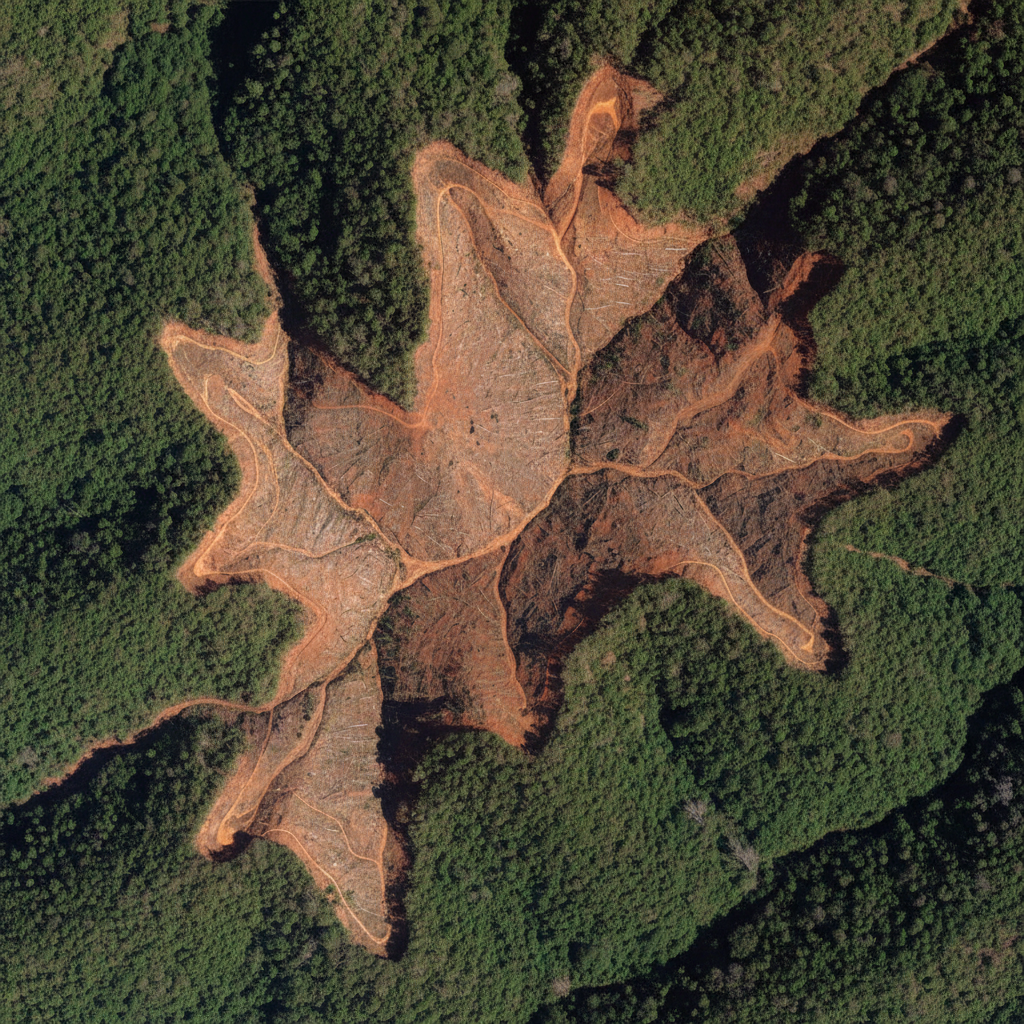
- Deforestation for agriculture increases GDP twice: once for the timber, once for the new farmland output. Green GDP subtracts the lost forest ecosystem value.
- Conventional GDP cannot distinguish between a country that is genuinely growing wealthier and one that is simply liquidating its natural assets.
Real-world use
Green GDP has been adopted experimentally by several countries:
- China launched a Green GDP pilot programme in 2004, but suspended publication in 2007 after results showed some provinces had near-zero or negative genuine growth.
- Norway has one of the world's most sophisticated natural capital accounting systems, tracking the value of its oil reserves, fisheries, and forests alongside GDP.
- The World Bank's "Adjusted Net Savings" metric is a form of Green GDP used to assess whether countries are genuinely saving or drawing down their wealth.
- The EU has committed to integrating natural capital accounting into national statistics through the SEEA framework.
Limitations
Green GDP faces significant practical and political obstacles:
- Placing a monetary value on nature is deeply contested — what is a forest worth? What is a species worth?
- China's experience shows the political danger: when Green GDP reveals that growth is environmentally destructive, governments may suppress the data.
- Methodologies vary widely, making international comparisons unreliable.
- It still doesn't capture social factors — inequality, health, happiness — that other alternatives address.
Green GDP is the easiest sell politically — it keeps the GDP framework that policymakers are comfortable with, while fixing its most obvious environmental blind spot. China's decision to suppress its own Green GDP results tells you everything about why this measure matters and why it faces resistance.
Related GDP alternatives
What if we started with GDP, added the good things it ignores, and subtracted the bad things it counts as positive?
A safe and just space for humanity: above the social foundation, below the ecological ceiling.
How efficiently does a country convert natural resources into long, happy lives for its people?